
Livraison en 48h - Expéditions les lundi, mercredi & vendredi

Problems & Solutions
When a plant slows down, yellows, turns black, or mold appears, it's rarely helpful to "take a chance." This section contains diagnostic-oriented FAQs to quickly identify the most likely cause and apply the right solution.
Diagnose quickly, fix without stress
Our answers are organized by symptoms and common situations. The goal is to help you make the right adjustments (water, light, substrate, ventilation, temperature) without resorting to unnecessary manipulations that could weaken the plant.
Each FAQ guides you on:
- common causes and how to confirm them
- gestures to avoid (common mistakes)
- simple and effective corrective actions
- signs of improvement to watch for
Common problems, concrete solutions
Here you will find answers on managing mold, fungi, rot, parasites, deformed leaves, or plants that wither after purchase, repotting, or a change of environment.
To go further
You can also consult our sections dedicated to plant-specific cultivation advice or cultivation techniques to delve deeper into a specific point.
Subcategories
-
Why is my carnivorous...
The mortality of carnivorous plants is almost always linked to a growing mistake. In most cases, it comes down to a problem with water, substrate, or unsuitable conditions. A carnivorous plant rarely declines without an identifiable cause.
Identifying the most common causes
1 - What is the most common cause of death?
The main cause is the use of unsuitable water. Water that is too mineralized leads to a build-up of salts in the substrate, which gradually weakens the plant until it dies.
2 - Can the substrate be responsible?
Yes. An unsuitable substrate, especially one that is too rich or contains regular potting soil, prevents proper root development and encourages decline.
3 - Can insufficient light kill a carnivorous plant?
Yes. Insufficient light causes gradual weakening. The plant exhausts itself, produces fewer leaves, and eventually declines.
The most common growing mistakes
4 - Can watering be an issue?
Yes. A lack of water or irregular watering can cause significant stress. However, unsuitable water is an even bigger problem than watering frequency. See our full guide on how to water carnivorous plants for more details.
5 - Can tap water be used?
No, in most cases. Tap water is too mineral-rich and causes harmful build-up in the substrate.
6 - Is repotting necessary?
Yes, in some cases. Degraded or unsuitable substrate needs to be replaced. Otherwise, the plant will keep declining even if other conditions are correct.
Environmental conditions
7 - Does humidity play a role?
Yes. Low humidity can weaken certain species, especially indoors or in a poorly suited terrarium.
8 - Can temperature be the cause?
Yes. Unsuitable temperatures, whether too high or too low depending on the species, can disrupt growth and weaken the plant.
9 - Is winter dormancy important?
For certain species such as Dionaea or Sarracenia, the absence of winter dormancy leads to gradual exhaustion and can result in the plant's death. Check our guide on overwintering carnivorous plants for best practices by species.
Recognizing signs of decline
10 - What are the first signs of a problem?
Slowed growth, leaves turning yellow, turning black, drying out, or the appearance of mould are common signs of a growing problem.
11 - Can a plant recover after a problem?
Yes, if the problem is identified quickly. By correcting growing conditions, some plants can recover, though the damage is sometimes irreversible.
Going further
Most problems can be avoided by mastering the basics of growing. To fine-tune your conditions, check out our guides on water, substrate, and watering, which are the most determining factors.
-

Why is my Dionaea...
It is common for a Dionaea muscipula to develop black patches during its growth. In most cases, this is a normal phenomenon related to the plant's life cycle or a change in conditions.
The important thing is to distinguish a limited and gradual darkening from a more global problem related to culture.
Understanding the blackening of the Venus flytrap
1 - Is it normal for a Venus flytrap to turn black?
Yes. Venus flytrap traps have a limited lifespan and eventually turn black before being replaced. This is normal if the plant continues to produce new leaves.
2 - Why did my Venus flytrap turn black after purchase?
A change in conditions (light, humidity, temperature) can cause stress. It is common for some traps to turn black after being placed in a new environment.
3 - Is a black Venus flytrap dead?
No, not necessarily. If the center of the plant remains alive and produces new shoots, the Venus flytrap can recover normally.
The most frequent causes
4 - Can bad water cause a problem?
Yes. Inappropriate water can gradually weaken the plant. Water low in minerals is necessary for sustainable cultivation.
5 - Can excess water cause blackening?
A constantly waterlogged substrate can unbalance the plant. Prolonged excessive moisture is not beneficial.
6 - Can a lack of light weaken a Venus flytrap?
Yes. Insufficient light often results in a weaker plant, which reacts less well and may show visible symptoms.
7 - Is indoor growing suitable?
Venus flytraps are generally more stable in bright, natural conditions. Indoors, cultivation errors are more frequent.
What should you do if your Venus flytrap turns black?
8 - Should the black parts be cut off?
Yes, when they are completely dry. This helps keep the plant clean without hindering its growth.
9 - How to check if the plant is still healthy?
Observe the center of the plant. If it remains active and produces new leaves, the Venus flytrap is still viable.
10 - Should it be repotted immediately?
No, unless the substrate is clearly unsuitable. Unnecessary repotting can add stress.
11 - Can the darkening be seasonal?
Yes. The Venus flytrap can change its appearance depending on the time of year and its growing conditions.
12 - How can we prevent this from happening again?
Check the basics: suitable water, good light, appropriate substrate and stable conditions.
Successfully growing Dionaea muscipula
Venus flytrap Dionaea muscipula) does not tolerate repeated mistakes well, but remains a robust plant when grown in good conditions. Occasional blackening is often normal, especially after stress or a change of environment.
It is primarily the quality of the water, the light and the stability of the conditions that allow for a healthy and sustainable plant.
Growing guide and tips | Problems & solutions
-
Can a carnivorous...
It is possible to grow a carnivorous plant indoors, but the results are often not as good as outdoors. Most species need plenty of light and stable conditions to develop properly.
Some plants adapt better than others, but growing mistakes are more common indoors.
Growing a carnivorous plant indoors
1 - Can you really grow a carnivorous plant indoors?
Yes, but it's not always ideal. Many carnivorous plants prefer conditions close to outdoor ones, with strong, natural light.
Indoors, you need to be more attentive to growing conditions. Your plant may not be as large and vigorous as it would be outdoors. Outdoors, however, some carnivorous plants cannot tolerate frost.
2 - What is the main difficulty indoors?
Light. Insufficient light is the most common cause of problems. A poorly lit plant often becomes weaker and develops poorly.
3 - Can all carnivorous plants live indoors?
No. Some species are more tolerant, while others cope poorly with these conditions, although this also depends on the exact conditions in your home. It is important to choose a suitable plant if growing exclusively indoors.
4 - Where should you place a carnivorous plant indoors?
In a very bright spot, ideally near a window. The goal is to provide as much light as possible without creating overly extreme conditions.
5 - Can artificial light be used?
Yes, if suitable. This helps compensate for a lack of natural light, especially in low-light environments.
Common mistakes indoors
6 - Is watering with unsuitable water a problem?
Yes. Water that is too mineralized can quickly weaken the plant. Using suitable water is essential. Check our guide on how to water carnivorous plants to avoid the most common mistakes.
7 - Can overwatering be a problem?
Yes. Indoors, evaporation is often lower. Excess water can therefore build up more easily.
8 - Is a lack of airflow important?
Yes. An overly confined environment can encourage problems and weaken the plant.
9 - Why is my carnivorous plant declining indoors?
Often due to a combination of factors: lack of light, unsuitable water, unstable conditions, or poorly managed feeding (see our guide should you feed your carnivorous plants).
Tips for success indoors
10 - Can growing conditions be improved?
Yes, by optimizing light, using suitable water, and maintaining stable conditions.
11 - Should a plant grown indoors be repotted?
Not systematically. Repotting should be done if the substrate is no longer suitable.
12 - Is this type of growing recommended for beginners?
Not always. Outdoor growing is often simpler for achieving good results.
Successfully growing carnivorous plants indoors
Indoor growing requires more care than outdoor growing. Good light, suitable water, and stable conditions are essential to limit problems.
Some plants can adapt, but you should accept that results may sometimes be more limited than in natural conditions.
-
Erreurs fréquentes...
Carnivorous plants have very different needs compared to traditional houseplants. Water, substrate, light or winter dormancy: some common mistakes can quickly weaken your plants. Here are the main mistakes to avoid to successfully grow carnivorous plants.
1 - Watering with tap water
Most carnivorous plants do not tolerate limestone or minerals commonly found in tap water. Unsuitable water will gradually damage the roots and weaken the plant.
Use only rainwater, reverse osmosis water or very low mineral water.
2 - Using regular potting soil
Carnivorous plants grow in poor, nutrient-free substrates. Standard potting soil or enriched composts often lead to root rot.
A suitable substrate based on peat moss, perlite or sphagnum moss is strongly recommended.
3 - Growing a Venus Flytrap in a dark indoor space
Dionaea muscipula needs a large amount of light and struggles in dark indoor environments all year round.
A Venus Flytrap grown behind a poorly lit window often becomes weak, pale and produces smaller traps.
4 - Forgetting winter dormancy
Some temperate carnivorous plants such as Venus Flytraps and Sarracenia require a winter dormancy period. Check our guide on overwintering carnivorous plants to prepare for this period properly.
Without dormancy, plants gradually weaken and lose vigor over time.
5 - Letting the substrate dry out
The substrate should remain constantly moist for most carnivorous plants.
Allowing the substrate to dry completely may stop growth or even kill the plant.
6 - Overfeeding the plant
Carnivorous plants do not need to be fed constantly. See our full guide on should you feed your carnivorous plants for more details.
Giving too many insects or unsuitable food can cause traps to rot and encourage mold growth.
7 - Triggering the traps unnecessarily
Repeatedly closing the traps of a Venus Flytrap unnecessarily weakens the plant.
Each trap can only close a limited number of times before naturally dying.
8 - Using an unsuitable pot
Small black pots heat up very quickly in direct sunlight and may significantly increase root temperatures.
Deeper pots generally provide more stable growing conditions.
9 - Exposing a plant too quickly to full sun
After shipping or indoor cultivation, suddenly placing a plant in full sun may burn the leaves.
A gradual acclimation is always preferable, especially during spring and summer.
10 - Buying a plant without understanding its needs
Not all carnivorous plants have the same growing requirements.
Some species prefer full sun, others require higher humidity or a winter dormancy period. Correctly identifying the species helps avoid most growing mistakes.
Successfully growing carnivorous plants
Successfully growing carnivorous plants mainly depends on a few simple rules: suitable water, the right substrate, enough light and growing conditions adapted to the species.
By avoiding these common mistakes, carnivorous plants usually become easy to grow and remain vigorous for many years.
-

Mould on carnivorous...
Carnivorous plants, grown in humid conditions favourable to their growth, can sometimes develop mould — notably Botrytis (grey mould), a very common fungus in horticulture. Understanding the conditions that cause it makes it easy to avoid.
Understanding Botrytis (grey mould)
1 - What is Botrytis?
Botrytis cinerea, also known as grey mould, is a very widespread fungus that can infect a large number of plant species. It's recognisable by its characteristic greyish fuzz, which develops on weakened, damaged or already dead tissue before it can spread to healthy parts.
2 - Why does it appear on carnivorous plants?
Carnivorous plants are grown in high-humidity conditions, an environment favourable to Botrytis, especially when air stagnates around the plant. Naturally blackened traps at the end of their life or wilted leaves provide an ideal entry point for the fungus, which first colonises already weakened tissue before spreading further.
3 - What conditions favour its development?
Botrytis develops mainly in cool, humid weather, with very high relative humidity and poor air circulation. This is why periods of high ambient humidity, such as during winter dormancy or in a closed terrarium, are particularly worth watching.
Other possible moulds
4 - Are all moulds as dangerous as Botrytis?
No. It's important to distinguish Botrytis, which attacks living plant tissue, from the white, fluffy mould that sometimes appears on the surface of the substrate (peat, sphagnum). The latter is most often saprophytic fungi such as Trichoderma or Penicillium: they only feed on dead organic matter and are not pathogenic to the plant itself.
5 - Should I worry about white mould on the substrate surface?
Under normal circumstances, no: these fungi are naturally present in peat and even help break it down, with some species like Trichoderma known to limit the spread of other pathogenic fungi. Only when growth is excessive, covering a large area, can they hinder substrate aeration and water absorption. Simply scraping the surface and improving ventilation is usually enough to make it disappear.
Preventing mould
6 - How can I prevent Botrytis on my plants?
The best prevention is to ensure good air circulation around the plants, avoid stagnant excess humidity, and regularly remove dead or wilted parts before they become a source of infection.
7 - Does overwatering encourage mould?
Yes. A substrate that's constantly waterlogged, with no air circulation at all, creates an ideal microclimate for fungal growth. Keep humidity adequate without permanent excess.
8 - Can live sphagnum moss go mouldy?
Yes, sphagnum can develop mould if kept too compact, too wet and without enough light. Good light and sufficient spacing between strands favour healthy growth rather than fungal development.
9 - Does growing in a terrarium increase the risk?
Yes, a closed terrarium naturally builds up more humidity and less air renewal than growing outdoors or in an open indoor space. Regular airing, even briefly, greatly reduces the risk of mould.
What to do in case of mould
10 - How do I treat a plant already affected by Botrytis?
Immediately remove the affected parts with a clean tool, cutting well beyond the visible area of mould. Then improve ventilation around the plant and temporarily reduce ambient humidity if possible.
11 - Should a plant affected by Botrytis be isolated from others?
This is recommended as a precaution during treatment, as Botrytis spores spread easily through the air and contact between neighbouring plants.
12 - Can the plant survive an infection?
Yes, in most cases, provided you act quickly. Botrytis primarily attacks already weakened tissue; an otherwise vigorous plant usually recovers well once the infected parts are removed and growing conditions are corrected.
Successfully preventing mould on your carnivorous plants
Botrytis develops mainly in stagnant, poorly ventilated humid conditions, while white mould on the substrate is usually harmless. Good air circulation, regular removal of dead parts, and increased vigilance during humid periods (winter dormancy, terrarium) prevent the vast majority of problematic cases.
-
Why is my carnivorous...
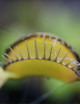
Yellowing is one of the most common symptoms in carnivorous plants. It doesn't always signal a serious problem, but it almost always indicates that a growing condition needs adjusting.
Understanding yellowing
1 - Is yellowing always a concern?
No. In some species, older leaves turning yellow is part of the plant's natural foliage renewal cycle. It's mainly widespread or sudden yellowing that should raise concern.
2 - What's the difference between yellowing and blackening?
Blackening generally affects parts already at the end of their life (see our page on Dionaea blackening), whereas yellowing more often concerns still-living tissue reacting to a growing imbalance.
The most common causes
3 - Can too much light cause yellowing?
Yes, an exposure that's too sudden or too intense, particularly after a poorly managed transition outdoors, can cause a sunburn-like yellowing on the most exposed tissue.
4 - Can a lack of light also cause yellowing?
Yes, conversely, pale yellow, leggy foliage often points to a lack of light, with the plant elongating its tissue to compensate, at the expense of colour.
5 - Can unsuitable water cause yellowing?
Yes. Water that's too mineral-rich (tap water in particular) leads to a build-up of salts in the substrate, which can progressively yellow the foliage. Only suitable water (rain, reverse osmosis, demineralised) should be used.
6 - Can an unsuitable substrate be the cause?
Yes, a substrate that's too rich, enriched, or degraded over time can throw the plant off balance and cause progressive yellowing of the foliage.
7 - Could a lack of prey play a role?
In some species, mild yellowing could come from a prolonged shortage of insect prey, with the plant receiving less nitrogen than it would in its natural habitat. This factor remains secondary to water, light or substrate, and should not lead to overfeeding the plant regardless.
8 - Can dormancy explain yellowing?
Yes, in several species, yellowing foliage naturally accompanies the onset of winter dormancy, before growth resumes in spring.
What to do about yellowing
9 - Should yellowed leaves be cut off?
Yes, once completely dry, they can be removed to keep the plant tidy, without hindering its growth.
10 - How can I tell if the cause is water or light?
Pale, diffuse yellowing across the whole plant tends to point to a lack of light, whereas localised yellowing on the most exposed parts tends to point to too much light or unsuitable water.
11 - Can the plant regain its normal colour?
Already yellowed leaves generally don't turn green again, but once the cause is corrected, new growth comes back with normal colouring.
Responding well to a yellowing plant
Yellowing is rarely a sign of imminent death, but it's always an indicator worth taking into account. By checking light, water quality and substrate, you'll usually quickly identify the cause and can correct the growing conditions before the problem worsens.